
Independent. AI-powered. On your side.
Is that used car hiding a flood?
Every monsoon, lakhs of cars go under water. A few months later they surface on listings: detailed, deodorised, and priced like nothing happened. The water damage doesn’t show in photos or on a test drive. It shows up in your ownership: dead ECUs, shorting harnesses, corrosion that never stops spreading.
Above the line: polished, perfumed, photographed.
Below the line, where the checklist looks first:
spare-tyre well, under the rear seat, glovebox, wiring-harness low points, engine oil
72
recent inspections analysed
₹31,150
median repair estimate uncovered per car
7 in 10
cars carried ₹20,000+ of itemised work
From InspektAI's own recent inspection reports, anonymised.
How flood cars reach your listing
After the Chennai floods of late 2024, which affected an estimated four lakh vehicles, a wave of cleaned-up cars moved through auctions and private sales into cities across South India. This repeats after every major flood. The detailing hides the story; the discount does the selling.
What the water actually ruins
Water settles low and works upward. Everything below the flood line is suspect:
- ECUs and body control modules: circuits corrode and fail weeks or months later
- Wiring harnesses and connectors under the carpet: intermittent, maddening electrical faults
- Seat rails, seatbelt anchors and floor pans: rust in places detailers never reach
- AC evaporator and ducts: the musty smell that perfume is hired to hide
- Gearbox and differential oils, emulsified by water entry through breathers
How our inspection catches it
A flood car can fool your eyes and nose. It cannot fool the checklist:
- Rust or evidence of water in the spare-tyre well, stagnant water’s favourite hiding place
- Water-damage evidence in the glovebox and under the rear seat
- A stale smell, like mildew, the one thing air freshener is hired to hide
- Engine oil checked for a milky appearance, the signature of water in the sump
- OBD scan for stored and pending fault codes the seller cleared from the dashboard
- Connector-pin corrosion at the low points of the wiring harness
- Cross-check of the insurance claim trail for flood-related claims
When to be extra careful
The riskiest window is three to six months after a major flood, when refurbished stock hits the market. A well-specced car priced oddly below market, freshly detailed with new carpets and a strong air freshener, deserves an inspection before it deserves your money.
What buyers say after the report
 Real reports
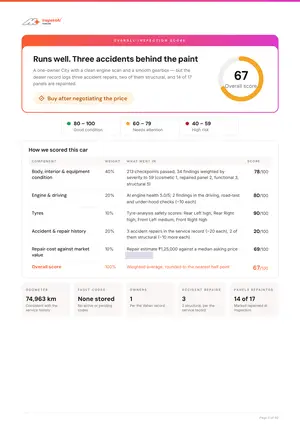
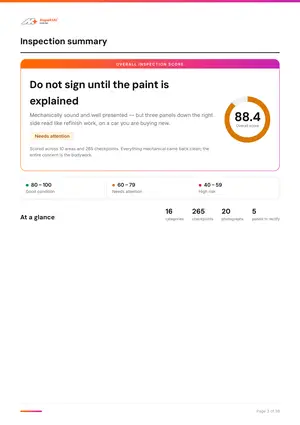
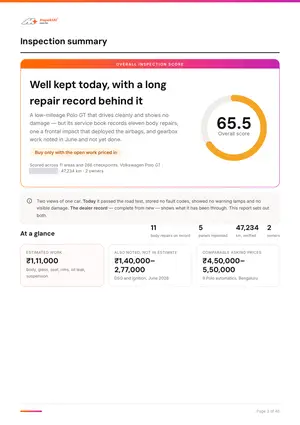
See a real report before you book
Frequently asked questions
Can a flood-damaged car really look brand new?
Yes. Professional detailing, new carpets, shampooed seats and replaced floor mats erase the visible story. The corrosion inside connectors and modules stays, and that is what we inspect.
Will a test drive reveal flood damage?
Usually not. Flood cars often drive normally for months before electronics start failing. An OBD scan and physical corrosion checks find what a drive cannot.
What if the car I want turns out flood-affected?
You will know before you pay, with photo evidence. Walk away, or negotiate knowing exactly what you are taking on.

Paint and colour on every panel, same-day report
We don't sell the cars we inspect. The report answers to you.
Book a flood check